Sunday, January 17, 2016

10 Ways to Market Your Book Anywhere In The World

10 Ways to Market Your Book
Anywhere In The World

(Expert Author's Article Week 1)


The list below briefly describes 10 effective ways to promote - and sell more of - your books. You'll find that these are not one-time activities, but instead require regular engagement and effort. Because of this, it's important to not expect immediate results, since long-term success is the result of creative and persistent promotion.

1. Social Networking
A social network facilitates regular communication between individuals who are connected by friendship or common interest. You can use these networks to enhance your writing, writing career, personal network, and sales. The key is to use all appropriate functions of a given social network for maximum benefit. For example, Facebook allows you to create a profile, join groups of people with similar interests, discuss your personal interests, and communicate with friends. Similar general-interest networks are Twitter, MySpace, and YouTube, each with different functions and advantages. These channels thrive on authentic social interactions, so be careful not to overtly sell your content to avoid alienating the connections you make. For example, rather than posting multiple messages about your book being available for sale, try to contribute meaningful dialogue in conversations about relevant topics. This will help position you as an expert, which will help build your author brand. Write fiction? Try creating a Facebook or Twitter account for your protagonist and hold conversations in the voice of that character.

There are also networks designed to connect business professionals such as LinkedIn, Plaxo, Ryze, and most recently, BranchOut (a Facebook/LinkedIn hybrid). You can target some networks based on the content of your book. For example, if you want to reach mothers, use CafeMom. To communicate with other authors and/or avid readers, try Shelfari or weRead where you can rate, review, and discuss your book, as well as books by other authors. Use Meetup to find and join in-person groups united by a common interest such as politics, books, games, movies, health, pets, careers, or hobbies. Sites like Pintrest, Delicious and Digg are social bookmarking services for storing, sharing, and discovering popular content. Find and use the best ones for your book and objectives.

2. Personal Networking
Networking is an organized method of creating links from the people you know to the people they know, allowing you to gain and use an ever-expanding base of contacts. It is the personal process of connecting with others to exchange information, advice, contacts, and support. Network at bookstore events, trade shows, conferences, writing groups, publishing association meetings, and anywhere you connect with people personally.

Your author biography may give you ideas of people to contact based on your networks, achievements, and interests. If you are not familiar with networking, start with people you know: friends, family, co-workers, alumni, and neighbors. Then move on to less-familiar people. Again, avoid overtly selling to people in your network; instead, ask them for referrals and to spread the word about your book. When personally networking, begin by introducing yourself and mentioning who referred you. Give your 30-second summary to provide an adequate frame of reference for the individual to give his or her recommendations. Ask pertinent questions, listen responsively and take notes. Once you have all the data you need, summarize the main points and find out how you may reciprocate. Be sure to ask whether or not you may use your contact person as a reference.

3. Create a Website that is Functional, Easy to Navigate and Active
Doing business in today's internet society requires a website. It is your online brochure describing you and your book in your terms, building your credibility as the author. Websites can and should be updated frequently, so it's a good idea to link your blog (see #8 below) to your site. Your website can also be your storefront through which you can sell your book 24/7. You can even link to your CreateSpace eStore so you don't have to fulfill orders on your own. A well-designed website instills confidence in your business as an independent author.

First, reserve a domain name that includes your name and/or the title of your book (sites like GoDaddy.com will host and design your site for you). Design your site to build your credibility and sell your books; show your book's cover and describe how it will benefit readers. If you write fiction, be sure to describe your plot in compelling terms (Read How to Write an Effective Book Description). Your website should make it easy to buy your book by providing links to retail outlets. You may also choose to sell your book directly on your site and offer incentives such as free shipping, a limited-time offer or a special price for an autographed book. A website is also a great place to showcase your bio, reviews, endorsements, and testimonials.

4. Basic Publicity
Publicity - also known as public relations (PR) - entails informing people about you and your book and encouraging word-of-mouth promotions. When planning your outreach, think about your target readers. What media do they watch, listen to, or read? You can reach a large number of people in a short period of time through broadcast appearances on TV and radio shows, print, and online media. Publicity is typically free and targeted to journalists, editors, and producers at media outlets. Media personnel are always looking for a story, so you and your book could potentially provide them with story ideas, interviews, background information, and other material. Read How to Give a Great Interview.

The basic element of publicity is the press release, a brief description that presents the most newsworthy aspect of your book - or the "hook" - in an interesting way. A good press release uses an attention-grabbing headline and lead paragraph. It is also free of overt commercialism. Subsequent paragraphs include background information, spokesperson quotations, and other information that helps put the newsworthiness of the story in perspective. Other forms of publicity include giving testimonials and endorsements; writing articles for print and online media and submitting letters to editors; sending a newsletter; and submitting your book for reviews.

5. Advanced Media Relations
After becoming comfortable with basic publicity, you can begin more concerted and targeted efforts to reach media. Create an informative press kit that has information about your book and why it is important to the outlet's audience. Include testimonials and a list of the topics you can discuss. When targeting press, it's often beneficial to start locally and then expand. For broadcast interviews, use the vocabulary of the audience. Avoid "ums" and telling the audience how they can benefit from your content by overtly selling your book. Second, project your voice at a steady volume and at a good pace, and enunciate properly. Finally, look the part of a successful author by dressing professionally and using body language and posture effectively.

Print and online media exposure is equally important, particularly if you do not like on-air performances. This includes newspapers, magazine, ezines, newsletters, and trade journals, most of which have well-trafficked websites. Approach journalists the same as you would approach producers with a press kit written to the needs of their readers. Contact them to review your book, suggest a story or interview on you and your book, or offer to contribute content to them. Use a targeted approach, starting with the media most likely to reach your key buyers. Follow up consistently and professionally.

6. Direct Marketing
Direct marketing is a form of communication that reaches a targeted audience directly through one or more channels. Examples include email, direct mail, catalogs, and promotional letters. Postcards and bookmarks can also be effective since the message is seen immediately without opening an envelope or email. In all cases, direct marketing materials can be sent to a targeted list of potential buyers, and responses can be measured.

In both email and postal-direct marketing, target audiences are a key factor. You can purchase a targeted list for postal mail and an opt-in (meaning the recipient has agreed to have the email sent) list for email marketing. Or build your own list by asking people on your site to sign-up to receive a newsletter or special promotions from you. It's important to make sure your direct marketing pieces stand out and grab the recipient's attention. In email, the subject line is critical. Similarly, you can write a teaser on an envelope to entice the recipient to open the envelope. In postal mail, send a cover letter, sales piece, and some means for the recipient to respond such as a business reply card (BRC). Make some offer that will get the recipient to act quickly, such as directing them to your website to see a sample chapter or offering a free gift or autographed copy with a response by a certain date. The options are unlimited, so you can test lots of different ideas to see which ones receive the best response.

7. Personal Marketing
When you have a highly targeted audience, you can reach them through personal communication. The major benefit of personal marketing is that you get immediate feedback as to how well your message is getting through. It will also give you an opportunity to answer questions and close sales. When you're selling your books, you're also selling yourself as an author, so personal marketing is a great way to build your authentic author brand with face-to-face communications. Examples of personal marketing initiatives are bookstore events, launch parties, direct selling, book tours, speaking events, and personal presentations at libraries.

Many of the same techniques for live publicity events apply to speaking events. Practice projecting your words and using your body language. While you'd use professional selling techniques when direct selling, be sure not to come off too "commercial" during other speaking events, book tours, or bookstore appearances. At these, you should discuss how your content can help and/or entertain the people in the audience.

8. Blogging
A blog (short for web log) is an online form of regular commentary maintained by an individual on a particular topic or cause. Most blogs are interactive, allowing visitors to leave comments. A typical blog is usually a text post, but they often contain images, embedded video, podcast installments, and links to other blogs or websites. There are several different forms of blogging, including microblogging, which consists of very short posts (ex. Twitter's 140-character posts), podcasts (audio blogs), and vlogs (video blogs).

You can use your blog to build your platform, exposure, and credibility as an expert on your topic. Keep it authentic, post to it regularly and respond to visitor comments quickly and professionally. If you cannot commit to writing a regular blog, consider creating occasional content for other blogs which pertain to the topic of your book. Reach out to similar bloggers for guest blog opportunities, and invite them to be a guest on your blog, as well. To get started blogging, consider using a template provided by services like Wordpress or Blogger, and feature your blog on your website.

9. Awards
There are many award competitions for most kinds of books. Awards can focus on your book's design, content, marketing, production quality, and even editing. There are awards for a variety of genres, including business, inspirational, fiction, and children's books. Winning (or being nominated for) an award has many benefits, such as increased exposure, greater credibility, and potential for testimonials and sales. An element of personal satisfaction comes with getting awards, too.

When you win an award, make the most out of it! Feature the awards in your literature, email signature, business cards, postcards, website, and letterhead. Describe your awards in your press kits and include them in press releases or any display materials for in-person events. Even if you don't win, you can always highlight that you were nominated or achieved another level of acknowledgment from the organization distributing the award.

10. Trade Shows/Fairs/Events
A trade show or fair is an event where sellers display their products to a group of corresponding buyers over a period of several days. They can be local, regional, national, or international events. One of the biggest in the U.S. publishing industry is Book Expo America (BEA), usually held mid-year in New York City, but you might consider attending a show targeted at your book's specific subject (for example, if your book is about automotive repair, consider attending a car show). Your town also probably has local events that would be appropriate for certain types of books. For a book on careers, you could attend a job fair, or a book on crafts or cooking might be appropriate to display at a local country fair or farmer's market. Trade shows and fairs give you the chance to network with people in the industry or potential readers, generate sales leads, close sales, research trends, build relationships, examine direct sales opportunities, generate publicity, and/or launch a new title.

When you find the best shows or fairs in which to participate, attend them first as a visitor before you commit the time and money to exhibit. For trade shows, if you decide to purchase floor space and display, get the exhibitor's manual and follow its guidelines carefully. Create an exhibit that will make attendees stop and look, with professionally produced graphics in a single, consistent theme. Try a raffle or a game to draw participation and attention to your display. After the event, follow up with the contacts you made and send all the samples and literature that you promised to send. Whether you're attending or exhibiting, you'll need some help getting the word out and managing your presence, so consider enlisting the assistance of a friend or family member.


Brian Jud is an author, book-marketing consultant, seminar leader, television host and president of Book Marketing Works, LLC. Brian is the author of How to Make Real Money Selling Books (Without Worrying About Returns), Beyond the Bookstore (a Publishers Weekly® book) and eight titles on book-marketing topics. Brian is the host of the television series The Book Authority and was an adjunct lecturer of marketing courses for graduate and undergraduate students at the University of Hartford and the University of Connecticut. Brian has a BS degree in marketing from the University of Cincinnati and an MBA in marketing from Xavier University.


Sam. O. Salau
(Africa's Leading Author On Campus Issues)

Monday, November 16, 2015

Book Marketing Formula

Book Marketing Formula 


Book Marketing Formula Starts with YOU

If you are waiting for the Author Lottery winning ticket … STOP.
  • Stop waiting for a traditional publisher to wave a magic wand.
  • Stop waiting for the media to call you.
  • Stop waiting for buyers to find you.
  • Stop waiting for bookstores to order truckloads of books.
STOP!
Instead, START planning. Start planning for:
  • how to get the media’s attention.
  • how to attract the buyers who you wrote your book for.
  • how to partner with bookstores.
  • how to contract with a publisher.
Or, START planning on what is on your Author and Book Wish List. Bookstores may not be important; being signed by a traditional publisher may not be of interest; or being featured within the media may not be critical. Getting buyers is.
Creating a successful Author and Book Marketing Formula doesn’t required advanced degrees in anything but determination and commitment on your part. No one cares more about your book than you do. No one knows more about the characters, their motivations and secrets and your storyline than you do. And no one has your unique insight and twists on your subject than you do. It’s your Game Plan to develop and execute.
These six steps will move you into a fast-forward mode:
  1. What do you want?
    Write it down—how can you get what you want if you don’t articulate it? Clearly and succinctly. Be outrageous. Be bold. It’s what you want. By putting what you want into writing starts the momentum moving that will fulfill what you are looking for.
    If you want book sales for a long time, how is a “long time” defined? Are you looking for a few months; or are you looking for book sales for many years?
    If you want the media to knock down your door, what does that look like? Being featured in the local/regional news? Having the Today show fly you to New York and being interviewed by Matt Lauer? Fielding calls from the Wall Street JournalPeople magazine and the National Enquirer within days. What?
    • Declare what you want.
    • Write it down to remind yourself.
    • Post it so you can see it.
    The visual reminder avoids the squirrel syndrome—any head-turner (big or small) that pulls you away from getting what you want/need to do or happen.
  2. Why do you want it?
    Clarity is critical. The why comes from your passion. What brought you to writing your book in the first place? What drives you to continue the journey?
    Without it, anything you do to support your book with fizzle. With the vision of what you want, coupled with passion of why you want it, it’s the commitment on your part that will make the what happen.
  3. What is it that you need to get what you want?
    Is it Time? Money? Assistance? More Info? What do you need to get you what you want?
    The wise author takes a magnifying glass to the what is wanted; then starts crunching the costs. One of the challenges writers and authors bang into daily evolves around money. Money meaning that it’s needed to pay living costs; on-going education costs (workshops, conferences, local networking events); research costs (any travel, reproduction costs, licensing costs or fees); publishing costs (consulting, set-up, design, printing, distribution, marketing) … and any costs that keep you (and your family) going.
    • Do you have a day job that underwrites what you need?
    • Savings that will carry you?
    • A book angel who believes in what you and your message is about and will support its coming to life?
    • Speaking gigs set up that will sell books onsite?
    • A website that is creating plenty of revenue?
    • Technology that works with you and your vision?
    Don’t forget the care of you. You and your body need it.
    When I’m deep into writing a new book, I schedule in two-hour massages twice a month, monthly chiro visits, new movie time twice a month—from a few dollars for the movie to $100 for each massage. And those items are reflected in #1 above—written down with an image attached. Visual reminders.
    Because we write and produce products (your book is a product), it’s common to think any part of the book creation is all done gratis by you—your time isn’t paid for. Yet it is. You take time from other things—there is a cost to it. Direct or indirect.
  4. What roadblocks and potholes could be in your pathway?
    Stuff happens. Sometimes in overwhelming buckets; other times just a few. But stuff happens. When it does, how quickly can you refocus, prioritizing what you need to do to get what you want? Is it a quick fix or does it need a lot of your time? Will you need help? What will help cost money (or more of your time)?
    Every year, I create and deliver a three-day author and publishing centric event. It takes buckets of time … some overwhelming. Potholes happen. This past weekend, one of my main speakers delivered an SOS call that a family accident would prevent her from coming to theAuthorU.org Extravaganza. Her talk was a critical one. Noodling for an hour, I had a few options. Reaching out to one of my Board members on Sunday, we solved it in three minutes.
    • Did I have to now create new copy for the replacement for social media? Yes.
    • Did I have to work with my virtual assistant to create new marketing material? Yes.
    • Did she need to take down what was scheduled to go out and replace it? Yes.

    All doable … and now done … yet it pulled two hours of my time—that could have been far greater if I didn’t have two stages of help. One didn’t cost me money, just a quick SOS email on my part followed up by a phone call. The second, a call with my VA the next morning to start the replacement changes. Her time I pay for.
    Stuff happens. Some stuff you can anticipate … much you cannot. When it does, guesstimate …
    • How much of your time is needed to assess it.
    • Is it solvable?
    • Do you need help?
    • Will there be a cost?
  5. Stats don’t lie … how are you going to measure what you do?
    Whatever you do in your Author and Book Marketing Formula, there should be some way to determine if progress is being made—creating results—or not. Removing items that suck time, energy and money are crucial to keep both you and your book moving forward. Otherwise, you support a sink hole and money/time pit.
    Are you thinking of attending a publishing related conference or workshop; are you contemplating whether you should pay a membership and join a group? Conferences and workshops should educate you. Organizations should provide networking and include like writers and authors who have their own visions. What they bring to you is energy and encouragement. Money and your time are on the table—what do you project your take-aways to be? Can you measure them?
    Is there a publishing consultant in your midst? Should you bring in a book coach for strategy or to coordinate what you are doing? Neither is free. How will you determine if the results are effective?
    It’s a mistake to think that the Author and Book Marketing Journey is a solo venture. Destiny doesn’t just drop in—it needs to be invited and nurtured along the way.
  6. Get off your tush.
    The GOYT Factor … Get Off Your Tush … for your book success must be in play. Waiting for anything to come to you always puts someone, something else in the driver’s seat. Knowing what you want is elementary to your success. Knowing who it is for; what motivates them to be attracted to your book and why you want it is critical.
    1. Define who your target market is—men, women or both.
    2. Identify what type of buyer / reader they are.
    3. Determine what drives them: hope, fear, learning, escape.
    4. Tailor your marketing to them.
    Author and book success come from you taking responsibility … it starts with your vision. Yes, I’m clear that all of this is an overwhelm—there is so freakin’ much to do. But if you aren’t clear on where you want to go and what you want to achieve, how can you get there? How can you clearly articulate your vision and get the help you need?
If book success is to be, it’s up to you. You are in charge. What are you currently doing to market you and your book, whether it’s pre-launch or post?
Judith Briles is a Contributing Writer for The Book Designer. She is an advocate for authors and writers and is known as The Book Shepherd. Delivering practical authoring and publishing information and guidance, she has authored 31 books, won multiple book awards and co-founded Mile High Press. Judith is the Chief Visionary Officer of AuthorU.org.


Sam. O. Salau
(Africa's Leading Author On Campus Issues)

Tuesday, October 27, 2015

FREQUENTLY ASKED QUESTIONS ABOUT ISBN

FREQUENTLY ASKED QUESTIONS ABOUT ISBN


One of the areas that I get the most questions about is the use of the ISBN, the unique numeric identifier that’s used around the world to identify books. New self-publishers are especially concerned with making sure their books are registered properly, that everything is done so that their book can be sold without any problems or confusion.

Because this area is specific to the book business, there’s a lot of confusion and misinformation about ISBN and how it works. I strongly recommend you use the resources provided by Bowker, the company responsible for ISBNs in the United States, on the ISBN website and at Bowker’s website.

But even faster, without any further delay, here are 20 answers to the most commonly-asked questions about ISBN.

Questions and Answers about ISBN

  1. What is an ISBN?
    ISBN stands for International Standard Book Number. It is a 13-digit number that’s used as a unique identifier for books. ISBN is used internationally.
  2. What do all the numbers mean?
    See my earlier article on decoding the ISBN.
  3. Why do we need ISBNs?
    We need them to identify each book that is published, and each edition of the same book. ISBN also identifies the publisher of the book. It is the standard ID number used to identify books by booksellers, libraries, book wholesalers and distributors.
  4. Should I get an ISBN?
    If you plan to sell your book in bookstores, to libraries, or through online retailers like Amazon.com, you will need an ISBN.
  5. Does a book have to be published to have an ISBN?
    ISBNs are issued to publishers, who then assign them to individual books. This can be done at any time, even before the book is written.
  6. Is the ISBN the bar code I see on the back of books?
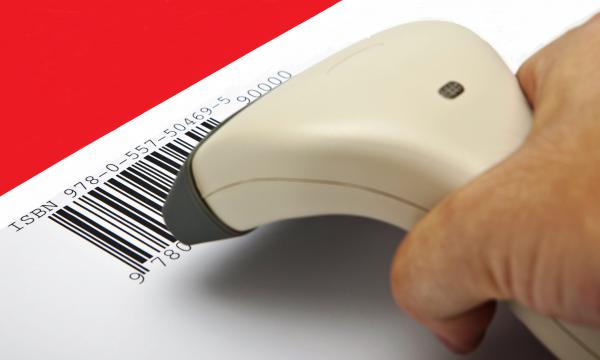
    The bar code is a representation of the ISBN in a form that can be identified by scanners. The bar code might also have other information embedded in it, like the price of the book and the currency in which it is priced.
  7. Okay, do I need to have a bar code too?
    Only if you plan to sell your book in bookstores. If you only plan to sell online, or privately like at speaking engagements, you don’t need a bar code. Many publishers put them on their books anyway.
  8. If I get an ISBN, does that mean my book is copyrighted?
    No, ISBN is administered by a private company for the use of the international book trade. Copyright is administered by the Library of Congress and is an extension of intellectual property law.
  9. If I have an ISBN, does that mean my book will be in Books in Print?
    Once you have an ISBN you can go to BowkerLink to fill out the forms necessary for your book to be listed in Books in Print.
  10. Can self-publishers get an ISBN?
    A self-publisher is still a publisher, so yes, you just apply for an ISBN like anyone else.
  11. How do I get an ISBN?
    Go to myidentifiers.com, the ISBN website run by Bowker, which is the only company authorized to administer the ISBN program in the United States. Click on “ISBN Identifiers” and you’ll be taken to a page where you can buy 1, 10, 100 or 1000 ISBNs.
  12. How many ISBNs should I buy?
    The least economical choice is to buy 1 ISBN. If you ever publish another edition of your book, or another book entirely, you will need more than one ISBN. I suggest you buy the 10 pack.
  13. What do ISBNs cost?
    A single ISBN today costs $125, while 10 ISBNs cost $250, 100 cost $575 and 1000 cost $1000. Note that the price per ISBN drops from $125 to $25 to $5.75 to $1.
  14. Isn’t it just a number? Why does a number cost $125?
    Many people are pondering this question, so far without an answer. Obviously, it’s not because of the cost of the product. Could there be another reason?
  15. Well, can I re-use my ISBN?
    No, sorry, once assigned to a book, an ISBN can never be reused.
  16. Where do I put the ISBN?
    You’ll print it on the copyright page, and it’s included in the Cataloging-in-Publication data block, if you use one. Otherwise, just print it on the copyright page and, of course, on the back cover as part of the bar code.
  17. I’m doing a print book and an ebook. Do I need two ISBNs, or can I use the same one?
    This is a matter of some discussion at the moment, since there are more and more electronic formats. The policy of assigning a separate ISBN to each and every edition is under review. Check back for more info.
  18. How about a hardcover and a softcover of the same book?
    You need a separate ISBN for each edition, to identify them for everyone who might want to find them in directories, catalogs and databases.
  19. If I revise my book, do I need to give it a new ISBN?
    If you only correct typographical errors, and don’t make any substantial changes to the text, you don’t need a new ISBN because it’s considered a reprint. A new edition would contain substantially new material, a major revision, or the addition of completely new elements. Anything that makes it a new book is likely to create a new edition and, therefore, need a new ISBN.
  20. How about if I just change the cover?
    You can continue to use the same ISBN, since the text has not changed.
Well, there you have it. In 20 questions and about 5 minutes, you’ve overcome the confusion about ISBN. Have a question you didn’t see answered here? Ask in the comments and we’ll run down the answer.


Joel Friedlander is a self-published author, an award-winning book designer, and an accomplished blogger. He's  the founder of the Self-Publishing Roadmap online training course, and a frequent speaker at industry events where he talks to writers about how the new tools of publishing can help them reach and inspire their readers.


Sam. O. Salau
(Africa's Leading Author On Campus Issues)

Tuesday, August 25, 2015

How to Write an Effective Book Description

How to Write an Effective Book Description


One of the most crucial elements to selling a book is also probably the most difficult element to create for authors. The book description is your lead in, your chance to hook a reader and get them to crack the cover and satisfy their curiosity. Even in an online environment, the book description can bridge the gap between having just another title among a sea of choices and a sellable book worth reading.

The problem is that many authors have a hard time writing a good book description. The main reason it can prove so difficult is because they don't want to leave anything out. As the creator of the material, there's a natural instinct to find a way to cram all or as much of that material into the description. But too many details can render your description confusing and ineffective.

Elements of the Book Description

As someone who has failed and triumphed over book descriptions, here is what I have learned through my personal series of trial and error. Call them rules, suggestions or ramblings of an author gone mad, but I've collected these tips by observing and consulting with other authors, both self-published and traditionally published.

1. Don't include subplots. When it comes to the book description, the only thing that matters is the main plot or main theme. That's all you need to focus on when you sit down to write your book description. Including anything else will send you off into an endless loop of "then this happened" moments that will dilute your book description. What is the primary action that drives your book?

2. Keep it under 150 words. This, no doubt, will elicit some moans and groans by a lot of authors. Summarizing a book that consists of tens of thousands of words to just 150 is impossible, right? No. In fact, I am of the belief that you should be able to summarize your book in a single short sentence. Remember, you don't have to concern yourself with the character development and sub-plots, so those tens of thousands of words it takes to adequately draw a reader into a book aren't necessary when it comes to your book description. In the simplest terms, what is your book about and what will make readers interested?

3. Write in third person, present tense. Even though your book is most likely told in past tense, your book description is not. You are describing this book as if you're sitting face to face with the reader, and they've asked you what the book is about. You wouldn't speak to them in the past tense. In addition, the book description is told from third person point-of-view even if you've written your book from first person point-of-view.

4. Use emotional power words. You are trying to evoke emotions with your book description, the same emotions that your book evokes. To convey these feelings, you need emotional powers words like tormented, charismatic, passion, obsession, terrifying, etc. There are too many to mention here, but a quick search for "Power Words" on the internet will produces hundreds of words to choose from. Just be careful not to overdo it. Use power words sparingly and strategically. If I had to put a number it, I'd say in a 125 word description, you'd use 6-10 emotional power words.

5. You are not the author. You are not writing your book description as the author. You are writing it as the publisher. Making an impact on the reader is your principal concern. What will move the reader to want to know more about your book? What will motivate the reader to add your book to his or her cart? Write the book description with your head, not your heart. Remember, the book description is marketing material - not literature.

Those are my five main points when it comes to writing a book description. Another good practice when writing your book description is to read as many book descriptions in your genre as possible. It's a great way to figure out what the industry standard is. These descriptions become industry standards for one reason: they sell books.

Here's an example of a book description that I believe gets it right. It's for Gil Adamson's novel, The Outlander, published by Harper Collins in 2007.

In 1903 Mary Boulton flees alone across the West, one heart-pounding step ahead of the law. At nineteen, she has just become a widow-and her husband's killer. As bloodhounds track her frantic race toward the mountains, she is tormented by mad visions and by the knowledge that her two ruthless brothers-in-law are in pursuit, determined to avenge their younger brother's death. Responding to little more than the primitive instinct for survival at any cost, she retreats ever deeper into the wilderness-and into the wilds of her own mind.

From the description, I know the book is a psychological thriller featuring a young woman on the run from some very nasty people. I get a hint that her husband may have deserved his fate, but I'm also led to believe that Mary Boulton may be mentally unstable. The description is roughly 90 words. It's told in third-person, present tense, and I count seven emotional power words ("heart-pounding," "frantic," "tormented," "mad," "ruthless," "primitive," and "wilds"). I only know the main plot: she killed her husband, and now she's a fugitive running for her life. I picked up the book because of its cover, but I opened the book because of this description. I now own it.

You're not just writing your description for your back cover. You're also writing this for your social media network, as part of your bio information for personal appearances, for flyers and other print material, etc. This isn't just for you; it's for your fans. With a concise book description, they are more likely to copy and paste it into an email to friends and family or on their own social networking accounts. Think of this type of description as being portable. It's easy to share and, as a result, is a major tool in your spread-the-word campaign.

I will leave you with this: you may get it wrong the first time you try to write a book description, and that's okay. It's just another part of the process. As you go through various versions, don't delete those earlier ones. I've found that by combining the elements of the latest version with earlier versions, I hit pay dirt. Good luck, and happy selling!


Written by Richard Ridley. A writer for more than 20 years, Richard offers a unique perspective on book marketing based on his own experiences as a self-published author. 


Sam. O. Salau
(Africa's Leading Author On Campus Issues)